
How Often Do You Really Need Dental X-Rays? (And Why Do Dentists Take Them?)
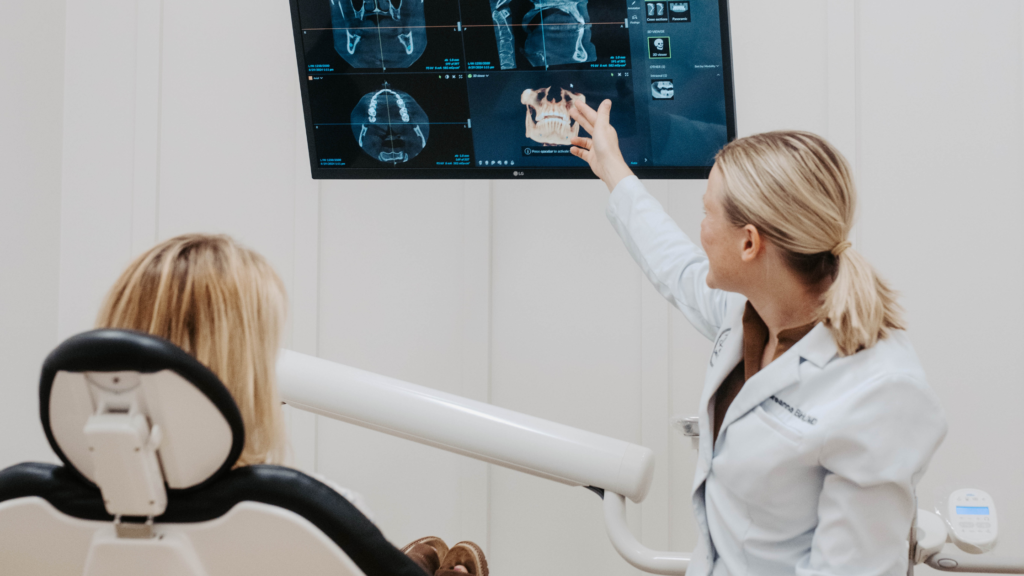
If you’ve ever been sitting in the dental chair and heard, “We’re going to take some X-rays today,” you may have wondered: Didn’t we just do these? Do I really need dental X-rays again?
It’s a fair question. And the answer might surprise you because there isn’t one set schedule that’s right for every patient.
At Birk Family Dentistry, we believe your dental care should be based on you. That includes your X-rays. Your age, dental history, risk for cavities or gum disease, current symptoms, and even the condition of previous dental work can all play a role in determining when dental X-rays are necessary.
So, let’s talk about why we take dental X-rays, what we’re looking for, and how often you need them.
Why Do Dentists Take X-Rays?
There is a lot we can learn by looking inside your mouth during a dental exam. But there are also things we simply can’t see with our eyes alone. Dental X-rays allow us to look at areas underneath and between your teeth. Depending on the type of X-ray, they can also give us information about the roots of your teeth and the bone surrounding them.
This can help us identify problems such as cavities between teeth, bone changes related to gum disease, infections around the root of a tooth, problems underneath existing dental work, impacted teeth, and other concerns that may not be obvious during a visual exam.
And here’s something that’s important to understand: a dental problem doesn’t always hurt. Sometimes an X-ray allows us to spot a problem while it’s still relatively small, before you’re dealing with a painful tooth or a more complicated treatment.
So, How Often Do You Really Need Dental X-Rays?
This is where dental care has become much more individualized. You don’t necessarily need the exact same X-rays at the exact same interval as someone else. Current dental recommendations support taking X-rays when they are clinically necessary rather than simply taking them because a certain amount of time has passed.
For example, someone who frequently develops cavities may need certain X-rays more often than someone who has had healthy, stable teeth for years. A patient experiencing new tooth pain may need an X-ray of that particular area even if their routine X-rays aren’t due yet.
Children and teenagers have different considerations because their teeth and jaws are still developing. Someone with gum disease, extensive dental work, previous root canals, implants, or other oral health concerns may also have different imaging needs.
What Can Dental X-Rays See That You Can’t See During an Exam?
Imagine two teeth sitting tightly next to each other. We can examine the surfaces we can see, but we can’t simply look through one tooth to see what’s happening where those teeth touch. That’s one reason X-rays can be so helpful. A cavity can begin developing between teeth without being visible during a regular examination. An infection can also develop near the root of a tooth, or bone changes can occur below the gumline.
X-rays give us another piece of the puzzle. They’re not a replacement for a good clinical exam, and a clinical exam isn’t always a replacement for appropriate X-rays. We use the information together to get a more complete picture of what’s happening in your mouth.
Are Dental X-Rays Safe?
This is another question we hear from patients, and we want you to feel comfortable asking it. Modern dental X-rays use a low amount of radiation, and digital technology has helped reduce exposure even further. Just as importantly, dental X-rays should be taken thoughtfully and only when the information they provide is useful for your care.
Did you know? A routine set of dental X-rays exposes you to very low levels of radiation—often less than you receive during a commercial airline flight.
Our goal is to get the information we actually need to diagnose concerns, monitor your oral health, and make informed decisions about your treatment. If you have concerns about X-rays or radiation exposure, please tell us. We’re always happy to explain why a particular X-ray is being recommended and what we’re hoping to learn from it.
Why Might I Need X-Rays If Nothing Hurts?
Surprisingly, pain isn’t always the first sign of a dental problem. A cavity can develop between teeth without causing symptoms. Gum disease can affect the bone supporting your teeth without causing significant pain. An infection around a tooth may also be visible on an X-ray before you’re experiencing the kind of symptoms that would send you running to the dentist.
Preventive dentistry isn’t just about cleaning your teeth every 3-6 months. It’s also about keeping an eye on changes so we can hopefully address problems before they become bigger, more uncomfortable, or more complicated.
What If I Just Had X-Rays at Another Dentist?
Tell us!
If you’ve recently had dental X-rays taken somewhere else, we may be able to use those images rather than taking them again. Having your previous dental office send your recent X-rays also gives us helpful information about your dental history.
There may still be situations when we need a different or more current image, particularly if you’re experiencing a new problem or the existing images don’t show the area we need to evaluate. If that’s the case, we’ll explain why.
Can I Say No to Dental X-Rays?
You always deserve to understand the care being recommended to you. If you’re hesitant about having dental X-rays taken, talk with us about it. Ask what we’re looking for, why we recommend the X-ray, and whether there are any concerns with waiting.
There may be situations when we simply can’t safely diagnose or treat something without the information an X-ray provides. But we don’t want you sitting in the chair wondering why something is being done. At Birk Family Dentistry, we want you to feel like a partner in your dental care.
Dental X-Rays Aren’t One-Size-Fits-All
So, how often do you really need dental X-rays? It depends. And in dentistry, that’s actually a good thing. Your dental care shouldn’t be based on a generic checklist. The X-rays we recommend should make sense for your oral health and your history.
At Birk Family Dentistry, our goal is to help you understand the “why” behind the recommendations we make. We want you to feel comfortable and confident with every dental care recommendation we make.
If you’re due for a dental visit, have questions about your X-rays, or something just doesn’t feel right with your teeth or gums, give our office a call at 480-565-7473. We’re always happy to talk through your concerns and help you decide what comes next.
FAQ
How often should adults get dental X-rays?
There isn’t one X-ray schedule that’s appropriate for every adult. How often you need dental X-rays depends on factors such as your oral health, cavity risk, gum health, dental history, symptoms, and previous treatment. Your dentist can determine when new images are clinically necessary.
Do I need dental X-rays every year?
Some patients may need certain X-rays more frequently because of their oral health or risk factors, while others may be able to go longer between images. Your dentist will consider your individual needs when deciding how often you need X-rays.
Why do I need X-rays if my teeth don’t hurt?
Some dental problems don’t cause pain in their early stages. X-rays can help dentists identify concerns that may not be visible during a regular examination, including cavities between teeth, changes in the bone, and problems around tooth roots.
Are dental X-rays safe?
Dental X-rays involve a relatively low amount of radiation. Dentists should use imaging thoughtfully and recommend X-rays when the diagnostic information is expected to benefit your care.
Can my dentist use X-rays from my previous dentist?
Often, yes. If you’ve had recent dental X-rays, ask your previous dental office to send them to your new dentist. Your dentist can determine whether those images provide the information needed or whether additional imaging is necessary.
Why would I need an X-ray for tooth pain?
An X-ray can sometimes help identify the source of tooth pain by showing areas that can’t be seen during a visual exam, such as the roots of the tooth, surrounding bone, decay between teeth, or signs of infection.
Do children need dental X-rays?
Sometimes. Dental X-rays for children should be based on their individual needs, including dental development, cavity risk, symptoms, and what can be seen during their clinical exam. Not every child needs the same images at the same intervals.